Nvidia backs up, Microsoft enters the game! AI PC's true winners and losers surfaced
AI PC, local large model, agent, three hot words are converging on a notebook. The tasks that computers can take on are beginning to have a new space for imagination.
On October 7, Microsoft announced that the Surface Laptop Ultra is available for pre-order starting at $2,599.99 in the United States and is scheduled to go on sale on October 16. It is powered by Nvidia's NVIDIA RTX Spark superchip with up to 128GB of unified memory; the platform provides up to 1 PFLOPS of FP4 AI computing power and supports large models running up to 120 billion parameters locally.
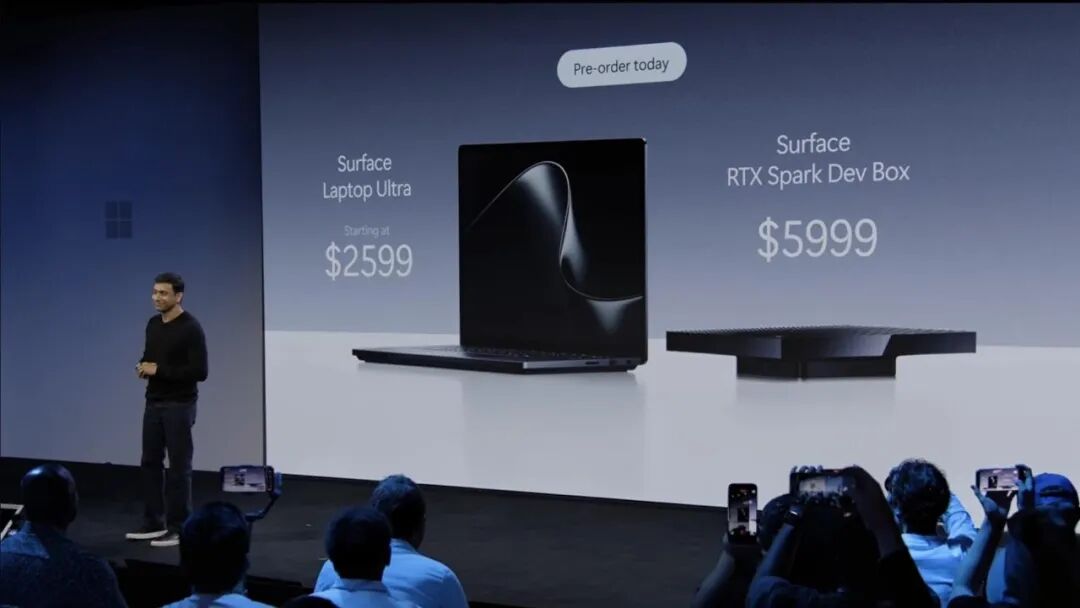
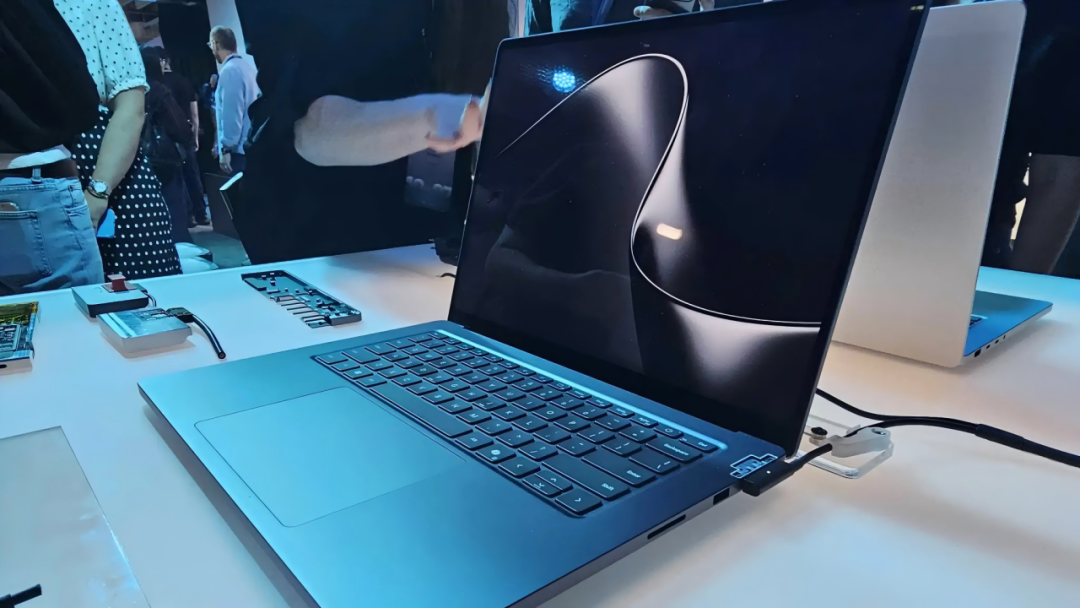
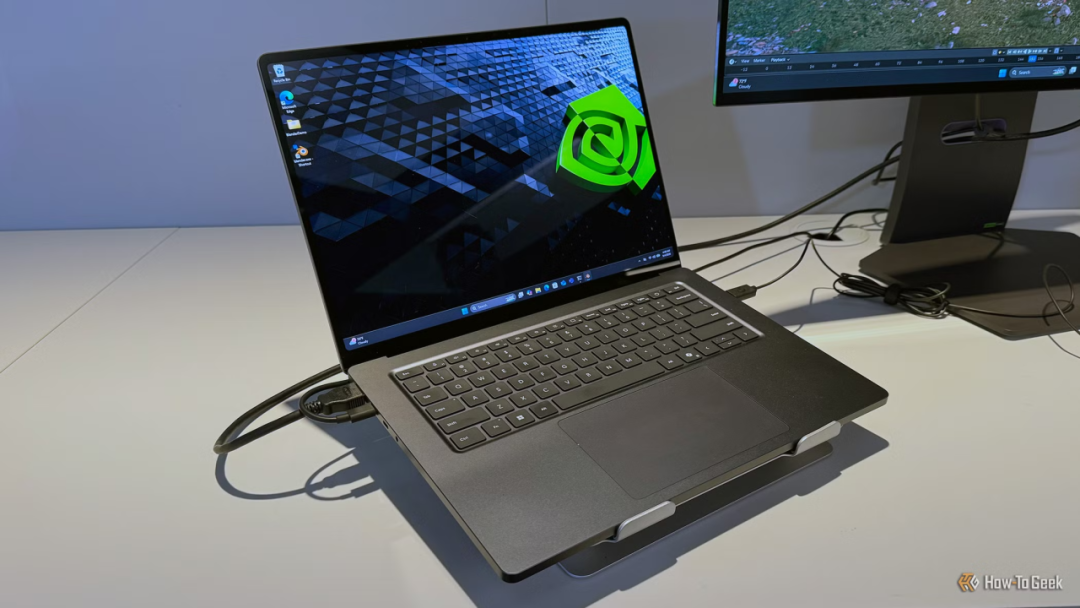
This laptop, which focuses on local AI capabilities, has finally reached the stage of being tested by the market.
Expensive, really expensive.
But what users ultimately need is for work to be really easy.
How much work can a computer do for you when big models can run locally?
This question determines whether an AI PC can become a private AI workstation.
- A Computer.
Start taking on more computing
01
First, let's look at the strength of this hardware upgrade.
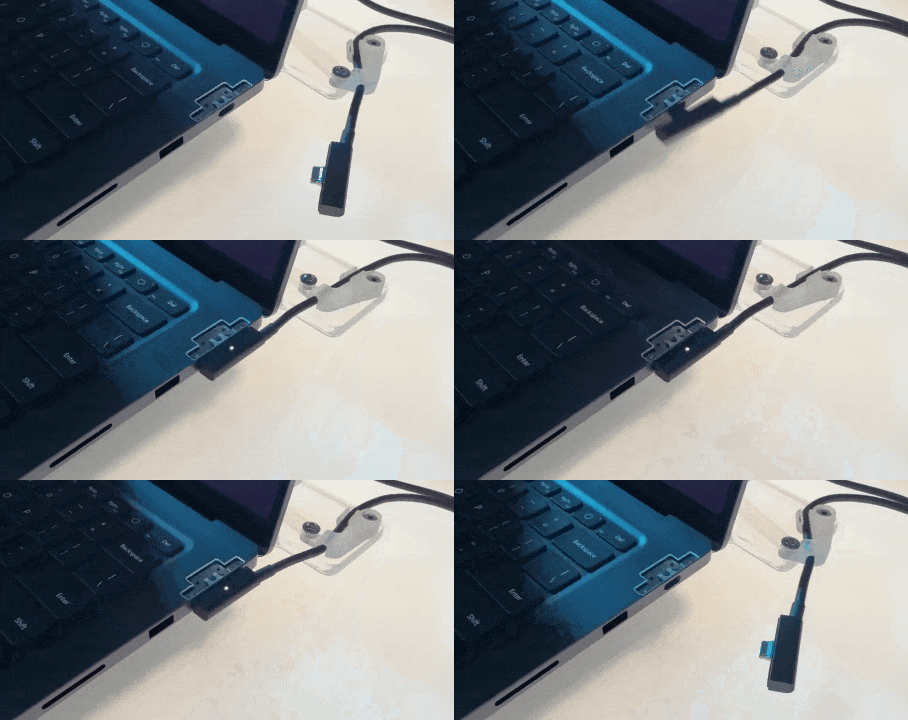
Featuring Nvidia NVIDIA RTX Spark superchip, 128GB unified memory, 1 PFLOPS of FP4 AI computing power, 120 billion parameter model, it has a 15-inch PixelSense Ultra touch screen, less than 18mm thickness, and weighs less than 4.5 pounds (about 2000 grams)
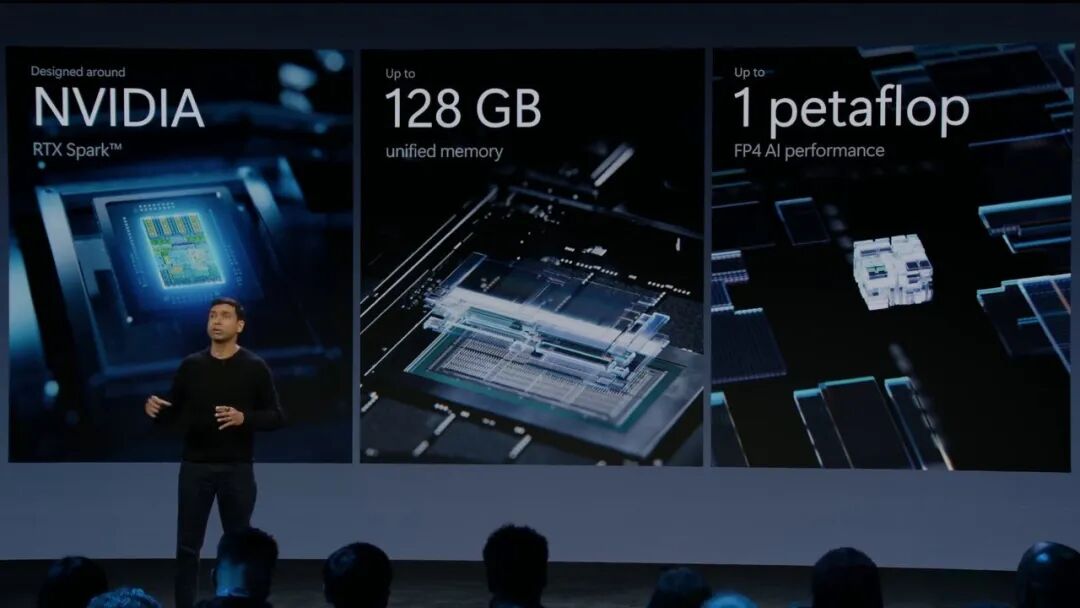
How should these numbers be understood?
Unified memory, so that the processor and graphics computing unit can share a large memory space, to accommodate the model, processing intermediate data to provide conditions.
Local inference means that certain tasks can be computed directly on the computer.
When the model is running natively, relevant inputs can be processed locally, reducing reliance on cloud-based transport and computing. Links involving online services may still require networking.
It's a practical choice.
However, the word “highest” must be clearly seen.
The starting version is not equal to the maximum memory configuration; nor can the FP4 computing power be directly converted to the actual speed of all tasks.
The model fits, and then there's the problem of inference speed, context length, and other software-intensive issues.
We should acknowledge advances in hardware, and we should also separate the propaganda parameters from the work experience.
Local AI already exists. What is noteworthy this time is that more computing power is beginning to enter the notebook and is further integrated with the operating system and software.
This gives the personal workstation a more concrete basis for imagination.
Authentic test questions
Hide in your folders
02
How far can you go to load a model into a computer and make it a work assistant?
Open your work folder and the answer is half clear.
Meeting minutes, customer needs, product information, quotation versions, and project summaries are often scattered in different locations.
There is a lot of information, and it takes time to rediscover and understand them.
What we repeatedly undertake every day is sorting, checking and connecting.
Take a project leader as an example.
When preparing for the debriefing phase, he needs to review the minutes of the meeting, compare the changes to the protocol, confirm what is done and what is still pending, and organize it into a document.
If the AI can read these files within the scope of the authorization, establish a project timeline, list the conflicting information, and attach the source, there is an opportunity to reduce this part of the duplication of effort.
This is a scenario scenario.
Whether it works well or not still depends on the specific software and actual performance.
But this scenario illustrates one thing:
The value of AI needs to go into the complete work process.
Finding the file is just the first step. Identify the version, check the facts, form the material, and submit it to someone for review. Each step is related to whether the results can be used.
Same goes for content creators.
The use of their own historical articles, interview records and product documents to form an outline needs to be accurately retrieved, and it is also necessary to distinguish between material facts and model speculations.
Developers may pay more attention to the efficiency of native test models, running code, and repeatedly modifying projects.
Together, these tasks drive the problem to execution.
Once you're able to answer the questions, you'll be able to complete the task.
If every time you use AI, you need someone to find the data, upload it manually, supplement the background, and then move the results back to the original software, the connection cost in the work still exists.
AI PCs have to make progress on these details in order to prove themselves.
Why Computer Manufacturers
Group Admission
03
It also explains why this time there's more to watch than one Surface.
Microsoft's RTX Spark device subscription list, which also includes Asus, Dell, HP, Lenovo and MSI, is scheduled to start shipping from October 16.
Chips, devices, operating systems, are working together around local AI.
Possessing computing power alone, it is not yet possible to automatically obtain work results.
The model needs the operating environment, the software needs the ability to call, the agent needs to access the tools and files, and the user needs to master the permissions.
Any disconnect can stop the experience in the demo phase.
We are more concerned about whether this set can be used in daily use.
This time, Microsoft emphasizes "hybrid intelligence": tasks can be executed locally when they are suitable, and when they are needed, they call the cloud.
Therefore, “how to divide labor between cloud and local” is the next key.
For tasks that are suitable for local completion, consider latency, data control, and call costs; for tasks that require greater capacity or online information, continue to leverage the cloud.
Users don't have to study models and chips every time.
Software should make this option easy.
My judgment is that the competition for AI PCs will increasingly fall on the workflow: who can turn computing power into a reliable, handy task experience, who has a better chance of retaining users.
Private AI Workstation
We have to go through three passes first.
04
1
The first was the effect.
120 billion parameters are attractive, but model size alone cannot guarantee task quality.
If a project analysis misses key changes, and if a material references an incorrect version, it is more worth checking than the parameter label of the model.
The second is cost.
Local inference may reduce some cloud calls, but device input, power consumption, and maintenance also require computation.
The occasional processing of several pieces of data, and the daily high-frequency running of the model, are two different use requirements.
We are calculating the benefits of long-term use.
The third is control.
Once the agent starts accessing files, running code, modifying settings, the user must know what it can do.
Which files can be read? What changes need to be confirmed? Is there a record of the execution process, and if something goes wrong, can it be traced back?
This determines whether a person is willing to hand over the task.
Local operation can increase the choice of data control; permission and execution management still need to be carefully designed.
If an assistant can write, calculate, and operate, but the user cannot grasp its authority, who dares to hand over important work to it?
The stronger the computing power, the clearer the control.
Buying an AI PC
It's worth asking more questions.
05
Whether the Surface Laptop Ultra is worth buying still needs to be answered by the actual performance after the launch.
Pricing, ongoing performance, software support, and what works for you should all go into judgment.
Today, it is even more worth clarifying how the AI PC should be tested.
We can expect it to be a private workstation and it should be asked to produce concrete results.
How much tidying time is saved per day? What tasks can be done locally? Can the results be checked and the operation be controlled?
These answers will gradually enter the purchase standard of computers.
The next time you choose a computer, in addition to the processor, memory and screen, it may be worth asking:
What can it do for me on an ongoing basis?
This sentence requires the product to answer with long-term experience.
Which of the duplicate tasks would you most like the AI PC to take over? Organize project materials, assist with creation, or handle day-to-day documentation?
Feel free to chat in the comments section.
# AIPC # SurfaceLaptopUltra # Nvidia # RTXSpark # Local Big Model # AI Agent # Private AI Workstation # Hybrid Smart # Office Efficiency # Industry Digital